
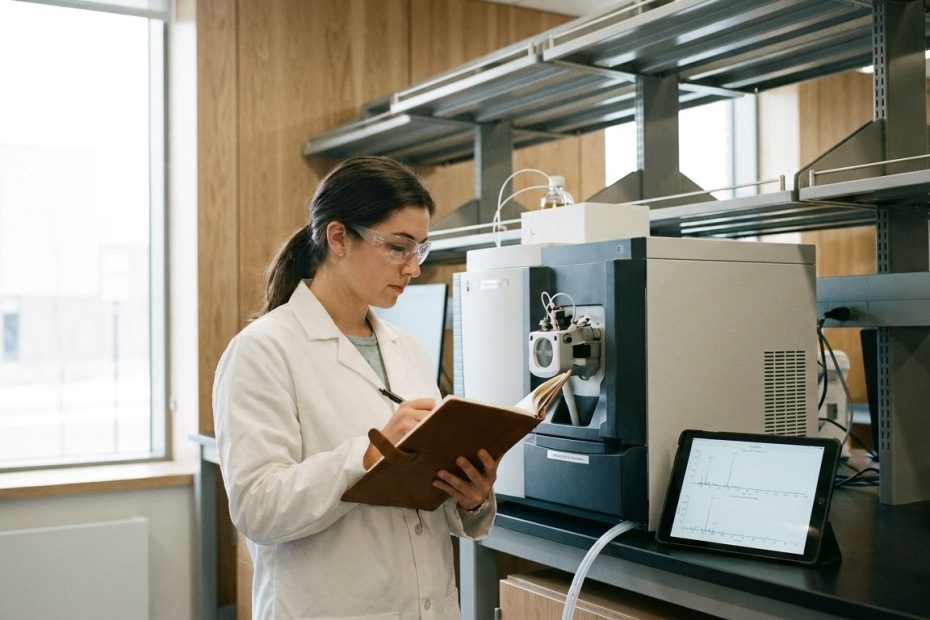
Lab work teaches you what theory looks like once it collides with reality. Lectures can give you principles, formulas, and polished explanations, but the lab teaches you judgment, discipline, troubleshooting, documentation, safety, and the kind of confidence that only shows up when you’ve had to make a call under pressure.
If you’re trying to understand why practical experience sticks so much harder than classroom content, the answer is simple: in the lab, you don’t just hear ideas, you execute them. You deal with instruments, uncertainty, failed runs, messy results, tight timing, and other people depending on your work. That changes how you think, how you communicate, and how you perform long after the lecture slides are forgotten.
What Does Lab Work Teach You That Lectures Never Will?
Lectures are built to organize knowledge. You sit with concepts in their cleanest form, often arranged in a logical sequence that makes the material look stable and predictable. That’s useful, and you need it. You need the equations, the mechanisms, the definitions, the standard conditions, the accepted models. Without that base, you’d be guessing in the dark.
But lab work teaches you what happens when that clean model meets real material, real instruments, and real limitations. You learn very quickly that a result can drift, a setup can fail, a sample can degrade, and a method that looked straightforward on paper can break down once you actually perform it. That moment matters. It forces you to move beyond recall and into judgment. You stop asking, “What’s the right answer?” and start asking, “What happened here, what can you trust, and what do you do now?”
That shift is where real professional growth starts. In accredited technical programs, student outcomes often include developing and conducting experiments, analyzing and interpreting data, using modern tools, functioning on teams, and applying judgment. Those aren’t side skills. They’re the working core of technical practice. A lecture can explain them. A lab makes you do them.
You also learn ownership in a way lectures rarely demand. When your experiment depends on your preparation, your measurements, and your documentation, you can’t hide behind passive understanding. You either prepared the solution correctly or you didn’t. You either labeled the sample accurately or you created confusion. You either wrote down what changed during the run or you’ve made the result harder to interpret. That kind of accountability shapes habits that carry straight into research, manufacturing, engineering, healthcare, quality control, and any setting where mistakes don’t vanish after an exam.
Why Do Labs Feel Harder Than Lectures?
Labs feel harder because they expose all the work that lectures usually compress or skip. In a lecture, you often see the polished version of the process. The method appears settled. The variables are named. The answer is reachable. The calculation fits on the board. In the lab, nothing feels that neat. You have setup time, calibration, waiting time, contamination risk, instrument quirks, incomplete observations, and data that may not line up with what the textbook led you to expect.
That gap can be frustrating, especially when you’re new. You may spend an hour preparing something only to realize one early mistake has affected everything downstream. You may get a signal that looks wrong and not know whether the problem is the instrument, the sample, the protocol, or your own handling. You may be graded on a report tied to a run that felt chaotic from the start. That’s one reason students often say labs are more stressful than lectures. The work is more exposed. Your process is visible. Your errors leave fingerprints.
Still, that difficulty is doing real educational work. It’s showing you the hidden cost of producing dependable information. It’s teaching you that useful data doesn’t appear because the theory is correct. It appears because someone planned carefully, controlled variables, followed procedure, watched for error, checked assumptions, and knew when to repeat a run instead of forcing a neat story onto a bad result. You can’t build that mindset through note-taking alone.
There’s another reason labs hit harder: time pressure. In many teaching labs, you’re working within fixed sessions, shared equipment, limited support, and a prescribed procedure. That can make lab classes feel rigid or rushed. Yet even that pressure teaches you something that lectures don’t. It trains prioritization. You learn to prepare before you arrive, to move with intent, to keep records as you go, and to recognize that poor organization at the start usually turns into poor analysis at the end. That’s not glamorous. It is, however, exactly how professionals avoid wasting days of work.
What Real Skills Do You Only Learn By Doing Experiments?
The first is measurement discipline. In lectures, measurement can seem abstract, almost interchangeable. In the lab, you learn that not all measurements are equal, not all tools are suitable, and not all readings deserve the same level of trust. You start to notice resolution, calibration, sensitivity, background noise, contamination, timing, and operator technique. You stop treating numbers as neutral facts and start treating them as outputs from a system that can fail in specific ways.
You also learn technique, and technique matters more than many students expect. Handling samples, transferring material, setting up equipment, keeping sterile conditions when needed, preventing mix-ups, cleaning correctly, and protecting instruments from misuse are not “small” tasks. They determine whether your experiment has integrity. A person with strong theory and weak technique can still produce weak work. Once you’ve spent enough time in a lab, that becomes obvious.
Another lab-only lesson is procedural thinking. You begin to understand why the order of steps matters, why one delay changes the result, why one shortcut creates uncertainty you can’t remove later. You stop seeing methods as lists to memorize and start seeing them as controlled sequences built to protect the validity of the outcome. That’s a major upgrade in how you think. It moves you from student mode into operator mode.
Then there’s experimental design. Even in structured labs, you start asking stronger questions. What is the control here? What variable is actually being tested? What counts as evidence? What would make this result convincing to someone else? In research-style courses, those questions go further. You may need to refine a method, adjust parameters, defend your choices, and explain limitations. That work develops the exact skill set employers and research supervisors value: you can move from concept to execution without losing rigor.
How Do Labs Build Judgment Instead Of Memorization?
Memorization can help you pass a quiz. Judgment helps you keep a project on track when the expected result doesn’t appear. In the lab, you’re constantly making small decisions with consequences. Do you trust the first reading or repeat it? Do you proceed with a questionable sample or stop and prepare a new one? Do you adjust the setup or leave it unchanged for consistency? Do you treat an odd result as noise, or is it a sign the system behaved differently than expected?
Those choices can’t be handled well by memory alone. You need to understand the method, the instrument, the assumptions behind the model, and the cost of being wrong. You also need emotional control. Lab judgment includes resisting the urge to force a result, resisting panic when something fails, and resisting the temptation to “clean up” data without a defensible reason. If you’ve worked with experienced lab staff, you’ve probably noticed this right away. They don’t just know more facts. They know what deserves attention and what can wait.
Assessment guidance for laboratory learning often highlights more than technical completion. It looks at planning, observation, interpretation, and the ability to explain what happened. That matters because judgment shows up in process, not just outcome. A student who notices an inconsistency, documents it, proposes a credible cause, and reruns the test may be demonstrating stronger learning than someone who got the expected answer on the first pass without understanding why.
This is also where labs correct a common academic illusion. In lectures, it can look as if mastery means knowing the content. In practice, mastery means using the content under imperfect conditions. You don’t become dependable because you remember the protocol line by line. You become dependable because you know how to respond when the protocol stops matching reality.
What Do You Learn About Failure, Troubleshooting, And Recovery?
Labs teach you that failure is not a side event. It’s part of the work. Equipment drifts. Reagents expire. Samples get compromised. Data come back noisy. Someone sets the wrong parameter. A tube gets mislabeled. A run gets interrupted. In a lecture, those issues might appear as brief warnings at the margin. In a lab, they are part of the operating environment. You learn that good work is not the absence of problems. It’s the ability to recognize, isolate, document, and respond to them.
Troubleshooting is one of the sharpest differences between classroom knowledge and practical skill. When an experiment fails, you need a method for diagnosing it. You check the obvious sources first. You confirm preparation, setup, controls, calibration, timing, contamination risk, and equipment status. You compare what should have happened with what did happen. You look for the first point where the process may have gone off course. That sequence sounds simple when written down, but it only becomes natural after repeated exposure.
You also learn that troubleshooting is a team skill. In many labs, the fastest path to a solution is a clear handoff: what you did, what changed, what you observed, what the controls showed, what you’ve already ruled out. That is practical communication under pressure. It’s one thing to say you understand the science. It’s another to explain a failure cleanly enough that a teaching assistant, supervisor, or teammate can help without having to reconstruct your entire workflow from scratch.
Over time, this experience changes your relationship with mistakes. You stop treating them as personal proof that you don’t belong. You start treating them as data. Not comfortable data, maybe, but usable data. That’s a major professional shift. It gives you resilience without making you careless. You become harder to rattle, more precise in your thinking, and less likely to repeat the same avoidable errors.
How Does Lab Work Change The Way You Communicate?
Lab communication is different from classroom communication because it has to work without your presence. In a lecture course, you can often explain what you meant after the fact. In a lab, your notebook, labels, logs, reports, and handoff notes may need to stand on their own. Someone else should be able to understand what you did, what you observed, and what changed, even if they weren’t there to watch it happen.
That requirement sharpens your writing fast. Vague language becomes a liability. Missing units create problems. Unclear sample labeling wastes time. Sloppy chronology makes it hard to trace where things went wrong. You learn to document conditions, deviations, and observations with enough detail to make the record useful, not decorative. That is one of the most employable habits a lab can build.
Technical reports also teach you to communicate uncertainty honestly. In many lecture settings, students are rewarded for arriving at the correct answer. In the lab, you may need to explain why the answer is provisional, why one data set is stronger than another, where the method imposed limits, and why a result should be interpreted cautiously. That style of communication is more mature and more valuable. It shows you can think beyond performance and into reliability.
And then there’s verbal communication. Labs force short, functional conversations that matter: asking for confirmation, flagging a problem, coordinating timing, clarifying who changed what, and stating exactly what you need. That kind of precision tends to be absent from lecture halls. Yet in real workplaces, it often matters more than polished classroom participation. A team can recover from bad news delivered early and clearly. It struggles when unclear communication hides a problem until it spreads.
What Do Labs Teach You About Safety And Responsibility?
Safety in a lecture can sound procedural. Wear this, avoid that, follow the rule. In the lab, safety becomes operational. You see that safe work is built from decisions: how you prepare, how you label, where you place materials, when you stop, what you report, and how aware you stay of the people working around you. It is not just compliance. It is judgment under real conditions.
Many institutions now emphasize near-miss reporting because near misses teach what ordinary success can hide. A container left uncapped, a mislabeled solution, a rushed transfer, an unstable setup, a disposal mistake that was caught in time, these events matter because they reveal weak points before an injury or major loss occurs. When you learn to notice and report them, you start thinking like a responsible practitioner rather than a student trying to avoid blame.
That matters beyond safety training. It builds professional maturity. You learn that your work affects other people. Poor labeling doesn’t just make your bench messy. It can create confusion for the next person. Bad waste handling doesn’t stay your private mistake. Weak documentation can compromise later decisions. A careless setup can damage equipment that a whole class or team depends on. Once you internalize that, you work differently.
The deeper lesson is accountability. In a lab, responsibility is visible. Actions have immediate effects on materials, equipment, timelines, and other people’s work. That makes responsibility less theoretical and more personal. If you want a setting that trains discipline fast, this is it.
Why Do Research-Style Labs Often Teach More Than Cookbook Labs?
Not all labs teach equally well. A tightly scripted teaching lab can still build technique, discipline, and observation, but it may limit ownership. If every step is predetermined and every result is already known, you can end up focusing more on compliance than inquiry. You finish the procedure, submit the report, and move on without ever needing to make a meaningful decision.
Research-style lab experiences tend to push you further because they require interpretation and ownership. In course-based research experiences, students often work with open-ended questions, uncertain outcomes, and methods that need adjustment. Education studies have linked these experiences with gains in understanding, experimental design skill, and professional development. That makes sense. When the answer is not predetermined, your thinking changes. You have to design, justify, revise, and defend.
This also explains a pattern many students notice later: they disliked lab classes but enjoyed actual lab work in research or industry settings. The difference is often control and meaning. In a rushed teaching lab, you may be following instructions under a deadline with limited ownership. In a research lab, your work may connect to a larger question, a real process, or an ongoing project. That gives your decisions weight. It also makes feedback more useful because it’s tied to real goals rather than a one-off grade.
Still, even cookbook labs have value when they are taught well. They can build the base layer you need before more independent work becomes productive. The best sequence is not lecture versus lab or structured lab versus research lab. It’s progression. You learn the theory, you practice the method, you encounter failure, you gain judgment, and then you use that foundation to handle open-ended work with more independence.
How Does Lab Experience Prepare You For Work After Graduation?
Employers rarely care only about what you can recall. They care whether you can execute reliably, document clearly, solve problems without drama, and work safely with other people. Lab experience speaks to all of that. It shows that you’ve worked inside a process where details matter and where output quality depends on more than your intentions.
If you move into engineering, science, manufacturing, healthcare, product development, quality assurance, environmental testing, or technical operations, the habits built in labs travel well. Preparation matters. Record-keeping matters. Repeatability matters. Knowing when to escalate an issue matters. Knowing how to distinguish a real signal from bad data matters. These are not classroom extras. They are day-to-day performance standards.
There’s also a confidence shift that comes from practical work. Not surface confidence, not the kind that comes from scoring well on a familiar exam. The useful kind. You’ve handled uncertainty before. You’ve made mistakes and recovered. You’ve seen equipment fail, methods break down, and results go sideways, then worked your way back to a defensible answer. That history changes how you carry yourself in technical settings. You’re less dependent on ideal conditions.
And if you plan to pursue research or advanced study, lab experience helps you ask better questions. You begin to notice whether a method is realistic, whether a data claim feels well-supported, whether a result is reproducible, and whether a paper’s clean narrative may be hiding a lot of practical work underneath. That skepticism is healthy. It’s not cynicism. It’s professional reading skill built from actual practice.
What Does Lab Work Teach You Beyond Lectures?
- Lab work teaches you troubleshooting, measurement, documentation, safety, teamwork, and judgment under real conditions.
- It shows you how theory behaves with imperfect tools, messy data, and time pressure.
- You learn to execute, analyze, adapt, and communicate—not just recall information.
Turn What You Learn In The Lab Into Career-Ready Strength
If you want to understand why lab experience stays with you, look at what it demands from you every single session: preparation, precision, patience, and decisions you can defend. Lectures give you the intellectual structure, but labs teach you how to operate when reality refuses to stay tidy. That’s where your technical maturity starts to show. If you treat lab work as more than a course requirement, you leave with habits that make you sharper in research, stronger in interviews, and far more dependable once real responsibility lands on your desk.

Chrysilios Chrysiliou is a commercial real estate executive at RDPH Properties, Inc. with a diverse background in aviation and entrepreneurship. A former Greek Air Force Academy graduate, flight instructor, and flight school co-owner, he now leverages decades of strategic leadership to identify and develop high-value real estate opportunities.