
You can transform chaos into control when you structure your Trello boards around measurable outcomes, defined priorities, and automated workflows. With the right setup, Trello becomes less of a visual to-do list and more of a real-time execution dashboard that aligns every project, team, and deadline.
This article shows you how to design Trello boards that replace scattered goals with clear, actionable systems. You’ll learn proven layouts, productivity features, automation strategies, and review practices that convert intention into completion—backed by real use cases and expert workflow optimization methods.
Define Your Board’s Purpose Before You Create a Single List
Every productive Trello board begins with clarity. Before you start adding cards, ask yourself: What does this board exist to accomplish? Whether you’re managing a product launch, organizing personal development goals, or coordinating a remote team, defining your purpose prevents clutter.
When you skip this step, your board fills with unrelated tasks, making it harder to track progress. According to Atlassian’s official Trello Best Practices, the most successful teams start with a “Board Charter” card pinned to the top-left corner—outlining the board’s function, audience, and flow. This single step helps every team member understand how their contributions fit into the larger goal.
Once you establish your board’s purpose, align its lists accordingly. A campaign board might use “Ideas → Prioritized → In Progress → Review → Done”, while a product roadmap could follow “Backlog → Development → QA → Deployed”. Your workflow should reflect how tasks naturally progress—not how you wish they would.
Use List Structures That Match Real Progress
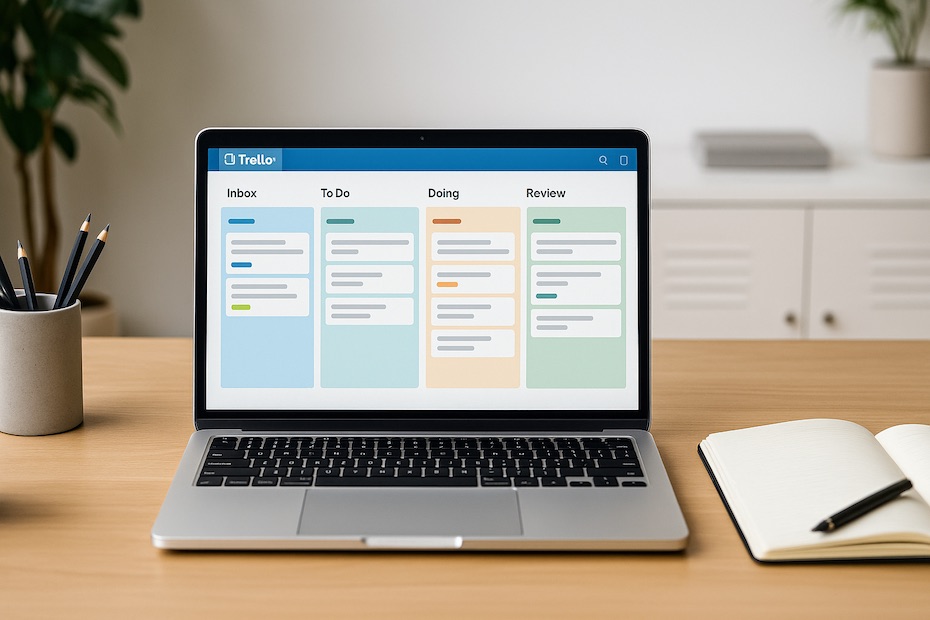
The most common mistake people make in Trello is overcomplicating lists. A minimal structure creates better visibility and faster updates. Trello’s own productivity guide recommends keeping between three to seven lists per board for optimal clarity.
For goal tracking, start with:
- Inbox: Where all new ideas or requests land.
- To Do: Items prioritized for action.
- Doing: Tasks actively being worked on.
- Review: Completed items awaiting verification.
- Done: Finalized outcomes.
Each list acts as a stage in your process, not a storage shelf. As cards move from left to right, you visualize the flow of progress, reducing mental load. Teams that adopt this visual rhythm often report fewer follow-up meetings and improved project velocity.
You can also include special lists like “Icebox” for long-term ideas or “Archive Soon” to phase out completed work without deleting it immediately. The key is to ensure that every card has a purpose—and an endpoint.
Make Labels, Checklists, and Deadlines Work Together
Color-coded labels are your board’s traffic lights. They instantly show what’s urgent, what’s in progress, and what’s blocked. Instead of random labels like “Task 1” or “High Priority,” design a consistent color system across all boards—for example:
- Red: High urgency or deadline risk
- Yellow: Waiting on review
- Green: On track and moving forward
- Blue: Informational or research-based
Combine labels with checklists and due dates for deeper tracking. Each card should have a checklist outlining the micro-steps to completion. When integrated with Trello’s “Progress Bar” Power-Up, your board visually reflects percentage completion for every task.
Deadlines make accountability visible. Trello’s Calendar View and Timeline View (available in Premium) show how your team’s workload aligns with time-based deliverables. You can instantly spot bottlenecks before they happen.
When labels, checklists, and dates work in sync, Trello transforms from a static list into a dynamic productivity engine that communicates status at a glance.
Automate Repetitive Actions with Butler
If you manually move every completed card or assign due dates, you’re wasting valuable time. Trello’s Butler automation lets you program actions that execute automatically—turning routine administration into background efficiency.
You can configure Butler to:
- Move a card to “Done” when all checklist items are complete.
- Auto-assign a team member when a card enters “Doing.”
- Set a recurring weekly reminder for backlog review.
- Archive cards 7 days after completion to keep boards clean.
For example, one client used Butler to automate sprint cycles for a software team: every Monday, Butler cloned the “Sprint Template,” reset due dates, and moved pending items from “Review” to the new sprint backlog. The entire setup ran itself with minimal intervention.
When your board automates its own maintenance, you and your team spend less time organizing and more time executing.
Align Every Trello Card with a Clear Goal
You can’t measure success without defining what success means. Every card on your Trello board should directly link to a measurable objective—revenue growth, user engagement, project delivery, or professional milestones.
Instead of writing a vague card like “Improve landing page,” rewrite it as “Increase landing page conversion by 15% by Q2.” Include key metrics in the card description and link supporting documents, research, or analytics dashboards.
This precision connects each micro-task to a macro-goal. During review meetings, you can trace progress through concrete evidence rather than guesswork. Teams that structure Trello cards this way often find alignment between departments becomes effortless—marketing, design, and engineering speak the same language of outcomes, not activities.
When you make goal alignment visible, your Trello board evolves from a tracker into a performance management tool.
Turn Your Board into a Feedback and Reflection Hub
A high-performing Trello board isn’t just about managing work—it’s about learning from it. At the end of every sprint, project, or monthly cycle, dedicate a list titled “Retrospective” or “Reflections.”
Move completed cards there and add a brief note: what worked, what didn’t, what will change next cycle. You can also use Trello’s Custom Fields to record post-completion ratings or outcomes, turning your board into a real-time project history.
This documentation builds institutional knowledge. When new members join, they can scroll through past cards to see lessons learned—shortening onboarding time and improving team continuity.
A study published on arXiv found that Kanban-style boards like Trello foster transparency and learning when teams document reflections regularly. The outcome is a more adaptive, self-correcting organization that grows from its own data.
Keep Your Board Clean, Focused, and Intentional
Even the best board loses power if neglected. Maintenance is non-negotiable. Review your Trello board weekly—archive old cards, adjust due dates, and ensure every list still serves a purpose.
Here’s a structure that high-performing teams follow consistently:
- Review “Inbox” items every Monday morning and reassign priorities.
- Archive all “Done” cards older than 30 days.
- Use Butler automation to tag inactive cards after two weeks.
- Conduct a 15-minute Friday cleanup session with your team.
If your board starts feeling overwhelming, consolidate it. Trello recommends breaking down oversized projects into separate boards and linking them using Card Mirrors or Workspace Table View. Each board should handle one focused outcome—not everything at once.
When your Trello board remains intentional, it becomes your command center—a system that manages your workload and clarifies your next move.
Use Trello Templates and Power-Ups to Scale
Once you’ve built one successful board, replicate it. Trello’s Template Gallery lets you save your structure and share it across projects or teams. This maintains consistency and reduces onboarding time for new workflows.
Power-Ups expand Trello’s potential dramatically. Integrate tools like:
- Google Drive or Dropbox for document attachments.
- Slack or Microsoft Teams for communication updates.
- Zapier for multi-app automation.
- Voting Power-Up for team prioritization.
A report from Atlassian in 2025 indicated that teams using automation and integrations completed 21% more projects on schedule. When your Trello environment becomes interoperable, it’s no longer a visual tool—it’s a connected productivity ecosystem.
Turn Trello Into Your Strategic Dashboard
As your workload expands, use Trello beyond task tracking. Convert it into a performance dashboard by combining dashboards, calendar, and timeline views. Trello Premium users can visualize workload distribution, deadline forecasting, and progress tracking in real time.
By tagging cards with KPIs (like “Revenue”, “Customer Growth”, or “Efficiency”), you can filter performance by outcome rather than task type. Trello’s dashboard view gives you quick insights into which projects are on target and which need support—without exporting a single spreadsheet.
You can also integrate analytics tools like Planyway or Screenful, both recommended on Trello’s Power-Up marketplace, to transform card activity into visual performance reports.
When your Trello board doubles as your performance dashboard, you lead with clarity, not reaction.
How to Use Trello Boards Effectively
- Start with a clear workflow and minimal lists.
- Use labels, due dates, and automations.
- Align every card with measurable goals.
- Review weekly and keep boards organized.
Turn Trello Into Your Personal Command Center
A Trello board reflects your operational mindset. The cleaner your lists, the clearer your direction. When you define purpose, automate tasks, and align every card to a measurable outcome, you stop managing chaos—you manage progress.
Your board becomes your blueprint for execution: simple, visual, and outcome-driven.

Chrysilios Chrysiliou is a commercial real estate executive at RDPH Properties, Inc. with a diverse background in aviation and entrepreneurship. A former Greek Air Force Academy graduate, flight instructor, and flight school co-owner, he now leverages decades of strategic leadership to identify and develop high-value real estate opportunities.