
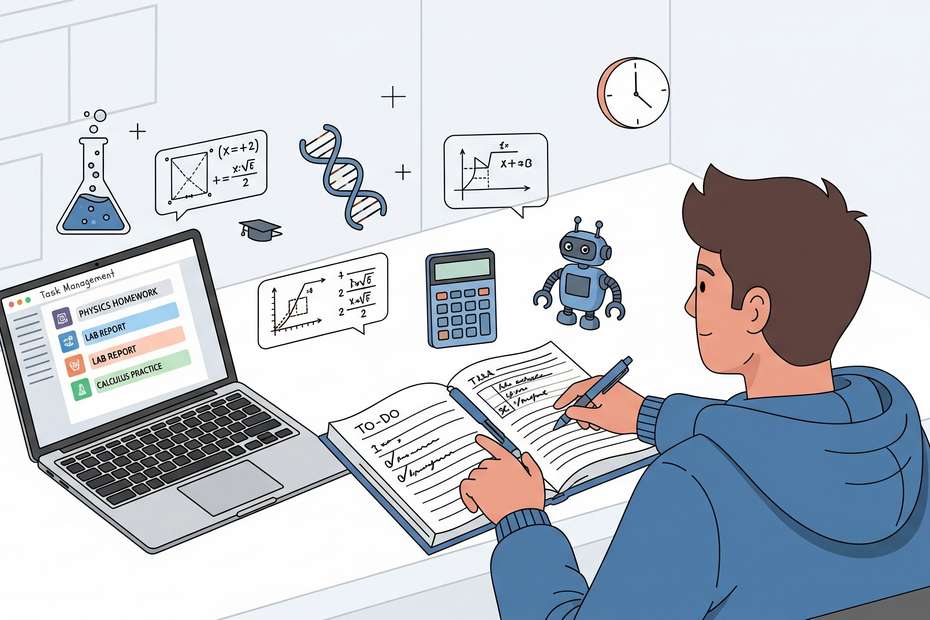
You master time management as a STEM student by setting clear goals, creating structured schedules, and applying proven focus techniques to handle demanding academic workloads effectively.
This guide reveals practical strategies tailored to STEM’s unique challenges—lab work, problem sets, projects, and exams. You’ll learn how to prioritize, manage distractions, and build routines that keep you ahead without burnout.
What are the biggest time management challenges STEM students face?
As a STEM student, you encounter workloads that often stack up: labs, coding assignments, problem sets, and collaborative projects, all within the same week. This overlap makes scheduling feel impossible.
The problem usually isn’t effort but structure. Many underestimate the time required for complex problem solving or lab prep. Add in group dynamics and deadlines, and you can easily fall behind.
Research consistently shows procrastination and lack of prioritization are the top reasons STEM students underperform despite effort. Recognizing these challenges is the first step toward regaining control.
How does goal-setting improve performance?
Clear goals give direction and structure to your daily actions. Without them, your workload feels like random chaos.
Start each semester by outlining all exams, projects, and lab reports. Then break each into smaller deliverables with precise deadlines. Instead of “study chemistry,” set a goal like “complete three practice problems on chemical bonding by 6 pm.”
The SMART model—Specific, Measurable, Achievable, Relevant, and Time-bound—works especially well in STEM. It transforms overwhelming tasks into manageable steps and ensures measurable progress.
Why is timeblocking effective for STEM schedules?
Timeblocking means assigning specific time slots for focused work, rest, and review. Instead of drifting from task to task, you commit to one activity during each block.
For instance, you might block 8–10 am for math problem sets, 11–1 pm for lab write-ups, and 3–5 pm for reviewing lecture notes. This method not only reduces multitasking but also creates a rhythm.
Research confirms that students using timeblocking are more consistent, less stressed, and achieve better outcomes because they know exactly when and how to tackle demanding tasks.
How do breaks and recovery boost productivity?
Intense focus without recovery leads to fatigue, mistakes, and reduced retention. Breaks are not wasted time—they are productivity multipliers.
Techniques like the Pomodoro Method (25 minutes focus, 5 minutes break) keep your energy levels high throughout study sessions. After four cycles, take a longer 15–30-minute pause.
Recovery also includes full days off from heavy studying to allow cognitive reset. Without recovery, you risk burnout and diminish your ability to retain technical knowledge.
What strategies reduce procrastination and distractions?
Procrastination thrives when tasks feel overwhelming. Break them into micro-tasks: instead of “finish lab report,” begin with “draft methods section.” Starting small builds momentum.
Digital distractions are another hurdle. Keep your phone out of reach, use app blockers, or enable “Do Not Disturb” modes during study blocks.
Regular self-checks help too. Note when you waste the most time—late night scrolling, mid-day slumps—and plan focused work outside those vulnerable hours.
What tools support STEM time management?
You need tools that make deadlines and tasks visible. Without them, it’s easy to miss deliverables.
Calendars—whether digital (Google Calendar, Notion) or physical—give long-term visibility of exams and projects. To-do list apps like Todoist or Microsoft To Do help organize priorities.
Essential methods and tools include:
- Weekly and monthly calendars with all deliverables listed
- To-do lists broken down into urgent/important tasks
- Time-tracking apps to measure where time actually goes
- Task batching (grouping similar tasks to save mental energy)
- Visible reminders of deadlines to prevent last-minute panic
These tools keep you disciplined and ensure nothing slips through the cracks.
How can you balance workload with personal well-being?
STEM’s intensity often makes students neglect rest, exercise, or social life—but balance is critical for long-term success.
Plan rest the same way you plan labs. Block out downtime, meals, and sleep in your schedule. Treat these as non-negotiable commitments.
Use energy mapping: work on high-focus tasks during peak energy times, and save lighter work for low-energy periods. This keeps you efficient while preserving balance.
Why does reflection and review improve time management?
Time management isn’t static—you refine it with weekly reflection.
Set aside 20 minutes at the end of the week to review: Did tasks take longer than planned? Which blocks were most productive? What distractions derailed focus?
This self-awareness helps you make adjustments. You become more accurate in estimating task durations and sharper in prioritization. Over time, your efficiency improves significantly.
Best Time Management Tips for STEM Students
- Break tasks into smaller goals with deadlines
- Use timeblocking for structured study and lab prep
- Apply Pomodoro sessions to sustain focus and energy
- Review progress weekly to sharpen scheduling habits
In Conclusion
Mastering time management in STEM is about precision and discipline, not working endless hours. By setting clear goals, scheduling with intention, managing distractions, and reflecting weekly, you build habits that let you excel academically while maintaining personal balance. These methods equip you to perform at your best without burning out.

Chrysilios Chrysiliou is a commercial real estate executive at RDPH Properties, Inc. with a diverse background in aviation and entrepreneurship. A former Greek Air Force Academy graduate, flight instructor, and flight school co-owner, he now leverages decades of strategic leadership to identify and develop high-value real estate opportunities.