
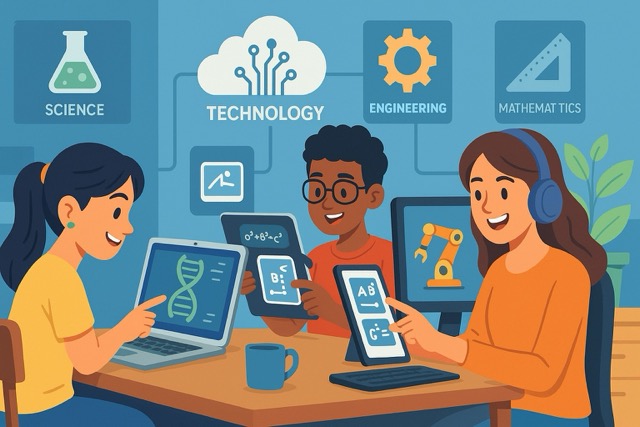
In today’s digital world, online platforms offer powerful tools to enhance interactive STEM learning experiences for students and educators alike. These platforms provide access to a wealth of resources, simulations, and opportunities for engagement that can transform traditional teaching methods. By using gamified tools, virtual labs, collaborative environments, and personalized learning technologies, you can create a dynamic, engaging, and effective STEM learning experience. This article explores how you can leverage these platforms to foster meaningful STEM education and help students excel in fields that are critical for the future.
Embrace Gamified Learning Platforms
One of the most effective ways to make STEM learning more interactive is by incorporating gamified platforms. Gamification can make learning fun and engaging, helping students stay motivated and active in their education. Platforms such as Khan Academy, Code.org, and Tynker offer gamified STEM lessons that encourage participation through challenges, rewards, and progression levels. These platforms not only make complex STEM concepts more approachable, but also foster a sense of achievement in students as they unlock new levels of learning.
For example, Code.org’s Hour of Code initiative introduces students to the basics of coding through interactive games featuring popular characters, making coding both fun and educational. By adding an element of competition and success, students are more likely to retain knowledge and develop a deeper interest in STEM topics. Whether it’s coding, math, or science, gamified platforms provide an immersive and stimulating environment that keeps students engaged and eager to learn.
Utilize Virtual Labs and Simulations
Virtual labs and simulations are a game-changer for STEM education, providing students with hands-on experience without the need for physical lab space or expensive equipment. Platforms like PhET Interactive Simulations and Labster allow students to conduct experiments, manipulate variables, and explore scientific principles in real-time. These tools are invaluable for illustrating complex theories and demonstrating scientific phenomena that are difficult to replicate in a classroom setting.
By using virtual labs, students can experience realistic scenarios, like observing chemical reactions, conducting physics experiments, or exploring the human body through virtual dissections. This immersive approach not only makes learning more interactive but also ensures that students gain a deeper understanding of scientific concepts. These platforms are especially beneficial in remote learning environments, allowing students to engage with experiments from home, breaking down the geographical barriers to quality STEM education.
Incorporate Interactive Coding Platforms
Coding is a fundamental skill in the modern job market, and interactive platforms make it accessible to learners at all levels. Platforms like Scratch, Codecademy, and Tynker offer step-by-step lessons in programming languages such as Python, JavaScript, and HTML/CSS. These platforms provide students with real-time feedback, allowing them to practice coding and build projects while receiving instant support.
Scratch, developed by MIT, is an excellent starting point for younger students, using a block-based coding system to teach programming concepts. As students progress, platforms like Codecademy and Tynker introduce more advanced languages and real-world applications. These platforms allow learners to create interactive applications, games, and websites, which not only teach technical skills but also foster creativity and problem-solving.
By leveraging coding platforms, you’re empowering students to become creators, not just consumers, of technology. Interactive coding tools also provide a hands-on, engaging way to develop essential skills that will serve students well in the rapidly growing technology sector.
Leverage Online Collaboration Tools
Collaboration is a key component of modern STEM education, and online platforms offer powerful tools for fostering teamwork and communication among students. Tools like Google Workspace for Education, Microsoft Teams, and Slack enable students to work together on projects, share resources, and communicate in real time, regardless of their physical location. These tools are especially useful in hybrid or fully remote learning environments, ensuring that collaboration can continue without interruption.
Using collaboration tools, students can contribute to group discussions, share their findings, and provide feedback on each other’s work, much like they would in a professional environment. Collaboration is essential in STEM fields, as solving complex problems often requires collective input and diverse viewpoints. By encouraging students to work together online, you’re preparing them for real-world STEM challenges that require teamwork and effective communication.
Access Open Educational Resources (OERs)
Open Educational Resources (OERs) provide free, high-quality content that can significantly enhance STEM learning. Platforms like MIT OpenCourseWare, Coursera, and edX offer a wide range of STEM courses, lectures, and materials from top universities and institutions. These resources allow students to explore topics in more depth and learn at their own pace, supplementing classroom instruction.
OERs can be an excellent way for students to explore advanced topics, access cutting-edge research, or simply review key concepts outside of school hours. These resources are often structured in a way that allows for self-paced learning, which is particularly useful for students who need extra time or want to explore STEM subjects beyond the classroom curriculum. By integrating OERs into your teaching, you’re providing students with access to top-tier educational content that can enhance their learning experience.
Implement Adaptive Learning Technologies
Adaptive learning technologies personalize the learning experience by adjusting content based on each student’s progress and understanding. Platforms like DreamBox, Smart Sparrow, and McGraw-Hill Education’s ALEKS use algorithms to assess student performance and deliver tailored lessons that target areas of difficulty. This personalized approach ensures that each student receives the support they need to succeed, whether they’re struggling with a particular concept or ready to move on to more advanced material.
Adaptive learning platforms can be especially valuable in STEM education, where students may encounter concepts of varying difficulty. By using adaptive learning technologies, you can ensure that students are continuously challenged without feeling overwhelmed, fostering a more supportive and engaging learning environment. These platforms allow students to progress at their own pace, making STEM learning more accessible to students with different learning speeds and needs.
Engage with STEM Communities and Competitions
Engagement with STEM communities and competitions can further enhance students’ learning experiences. Online platforms like FIRST Robotics, Science Buddies, and Khan Academy’s Challenges offer opportunities for students to participate in group projects, competitions, and STEM-related events. These platforms not only foster a sense of community but also provide real-world applications for the skills students are developing.
For example, FIRST Robotics offers hands-on experiences for students to design, build, and compete with robots, allowing them to apply STEM concepts in a team-based setting. Participating in STEM competitions and community projects encourages critical thinking, problem-solving, and collaboration, all of which are essential skills for future success in STEM careers. Additionally, these experiences can help students build portfolios and gain recognition for their accomplishments, which can be valuable when applying for college or internships.
Enhancing STEM Learning with Online Platforms
- Gamified Learning: Platforms like Khan Academy and Code.org make STEM fun through challenges and rewards.
- Virtual Labs: PhET and Labster offer interactive simulations for science experiments.
- Coding Tools: Platforms such as Scratch and Codecademy teach programming with hands-on projects.
- Collaboration: Tools like Google Workspace facilitate teamwork in STEM projects.
In Conclusion
Leveraging online platforms for interactive STEM learning has the potential to transform education, making STEM fields more accessible, engaging, and impactful for students of all ages. By utilizing gamified platforms, virtual labs, coding tools, collaboration technologies, OERs, adaptive learning, and STEM competitions, you can create an engaging and dynamic learning environment that prepares students for the challenges of tomorrow’s workforce. As you integrate these tools into your teaching or learning process, you’ll not only enhance students’ STEM skills but also foster a deeper passion for innovation and problem-solving that will serve them well in the future.
Explore more insights and articles on education and technology on this Medium profile: Read articles and perspectives.

Chrysilios Chrysiliou is a commercial real estate executive at RDPH Properties, Inc. with a diverse background in aviation and entrepreneurship. A former Greek Air Force Academy graduate, flight instructor, and flight school co-owner, he now leverages decades of strategic leadership to identify and develop high-value real estate opportunities.