
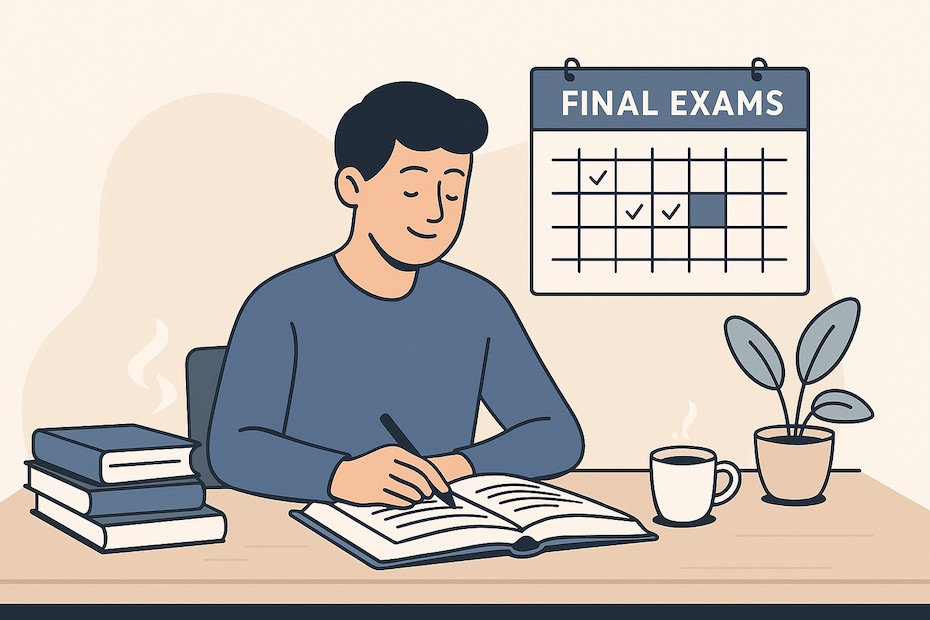
You ace final exams without stress by preparing early, using proven study techniques, and maintaining healthy routines that keep your mind sharp and focused.
This guide delivers ten actionable, evidence-based strategies drawn from high-performing students and academic coaches. You’ll learn how to study smarter, recall information under pressure, and walk into the exam room with confidence.
1. Break Study Material into Small, Scheduled Chunks
Dividing your workload into smaller, timed sessions helps you absorb more information and retain it longer. This approach, known as spaced repetition, is supported by decades of cognitive research.
Set specific goals for each session—such as reviewing one chapter or mastering a formula set. By ticking off each milestone, you’ll track tangible progress and avoid last-minute overload.
Consistency is the key here; short, focused sessions over several days outperform a single marathon study day.
2. Prioritize Sleep Over Late-Night Cramming
A well-rested brain processes and recalls information far more effectively than one running on minimal sleep. Sleep also strengthens neural connections that store what you’ve learned.
Instead of staying up to re-read material you already know, stop studying at a set hour each night and stick to a regular bedtime. This ensures you’re alert, focused, and mentally sharp on exam day.
Cutting sleep for “extra” study time often backfires, lowering performance and increasing stress.
3. Use Active Recall and Practice Questions
Active recall—testing yourself without looking at your notes—forces your brain to work harder and strengthens memory retention. Practice questions simulate exam conditions and identify weak spots early.
You can use flashcards, online quiz tools, or old exam papers to create self-testing opportunities. The more you practice retrieving information, the faster and more accurately you’ll do it under pressure.
Pair this with timed drills to match the pace of your actual exam.
4. Create a Clear, Realistic Study Schedule
A well-structured schedule helps you distribute topics efficiently and prevents you from spending too much time on familiar material.
List your subjects in order of priority, allocating more time to challenging areas. Include daily review periods and planned breaks to keep your energy steady.
Your schedule should be realistic enough to follow consistently, not so ambitious that it becomes overwhelming.
5. Use Mindful Breathing to Reset Focus Instantly
Stress can derail concentration, even if you’ve studied thoroughly. Mindful breathing—slow, deliberate inhalations and exhalations—can quickly calm your mind and improve focus.
Spend one to two minutes on deep breathing before study sessions and during the exam if you feel tense. This technique lowers heart rate, eases anxiety, and sharpens mental clarity.
Building this into your routine can make staying calm under pressure much easier.
6. Eat, Hydrate, and Move for Mental Sharpness
Your physical state directly impacts your cognitive performance. Staying hydrated, eating balanced meals, and incorporating light physical activity can significantly improve focus and stamina.
Avoid heavy, greasy foods before studying or exams, as they can cause sluggishness. Opt for nutrient-rich snacks like fruit, nuts, or yogurt.
Short walks or stretches between study blocks keep blood flowing and help you reset for the next task.
7. Reframe Negative Thoughts with Neutral Self-Talk
Your mindset influences your ability to recall information and think critically. Replace self-defeating statements with neutral, performance-oriented ones.
Instead of “I’m going to fail,” tell yourself, “I’ve prepared well, and I’ll focus on what I know.” This simple shift reduces anxiety and keeps you in control.
Regularly practicing constructive self-talk strengthens confidence for exam day.
8. Avoid Cramming and Stress-Spreading Company
Last-minute cramming often causes mental fatigue and confusion. Surrounding yourself with stressed or negative peers can amplify your own anxiety.
Choose quiet, supportive environments where you can focus without distractions. Study groups are useful only if they are organized, on-topic, and positive in tone.
Protecting your mental space is as important as protecting your study time.
9. Leverage Revision Week or Reading Period Strategically
Use any designated revision week or reading period to review and strengthen weak areas rather than starting new topics.
Revisit your most challenging subjects with active recall methods. Simulate exam scenarios to build confidence and familiarity with the format.
By focusing your efforts where they have the most impact, you’ll maximize your preparation.
10. Review What You Don’t Know, Not What You Know
Spending time on topics you’ve already mastered feels comfortable, but it’s not productive. Shift your focus to areas where your understanding is weakest.
Prioritize these in your final review sessions, using practice questions to confirm improvement.
Closing knowledge gaps boosts both performance and confidence.
How to ace final exams without stress
- Use spaced study sessions
- Sleep instead of cramming
- Practice active recall
- Schedule strategically
- Use mindful breathing to stay calm
In Conclusion
You can excel in final exams without the pressure by preparing early, studying with purpose, and managing your well-being. Spaced repetition improves retention, active recall boosts accuracy, and healthy habits keep you sharp. By following these ten strategies consistently, you’ll walk into your exams ready, focused, and stress-free.

Chrysilios Chrysiliou is a commercial real estate executive at RDPH Properties, Inc. with a diverse background in aviation and entrepreneurship. A former Greek Air Force Academy graduate, flight instructor, and flight school co-owner, he now leverages decades of strategic leadership to identify and develop high-value real estate opportunities.